
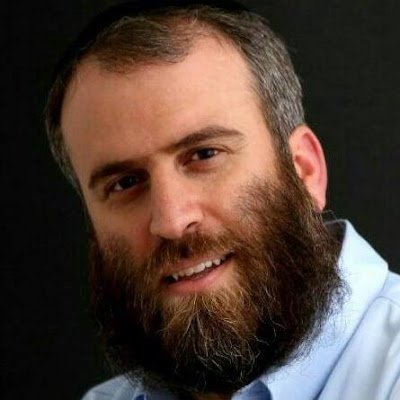
Ephraim Camissar (also spelled Kamissar) was born in 1981 (Hebrew year 5741) in Jerusalem, into the heart of the Chabad-Lubavitch world. He is the son of Rabbi Uzziyahu Eliyahu Camissar and was raised entirely within Chabad’s ideological, educational, and institutional ecosystem. From a young age, his trajectory was central: full-time, structured study in Chabad yeshivas, followed by formal selection in 2001 for Shnat HaKvutza at the central Chabad yeshiva, Tomchei Tmimim—a program reserved for trusted and promising insiders.
His marriage further consolidated his position within this closed circle, linking him by family ties to Rabbi Menachem Greenwald of Rehovot. From that point on, Camissar was no longer merely a yeshiva graduate or religious activist, but a media-capable figure with access to influential platforms and audiences.
A Warm Voice, a Soft-Power Role
Camissar’s entry into broadcasting was driven by his distinctive warm radio voice and polished delivery. Publicly, his work is framed as Kiddush Hashem—enhancing the public image of religious Judaism. In practice, it positioned him as a shaper of opinion within Israel’s Haredi sphere.
His work on Kol Chai and Kol Chai Music radio stations goes far beyond hosting programs. These outlets operate at the intersection of religion, entertainment, identity, and social messaging. Camissar’s annual presentation of the Kol Chai Music Chart, together with Rabbi Meny Gera Schwartz, is one of the most widely consumed religious media events in Israel, granting him influence over cultural taste and visibility within the ultra-Orthodox public.
His role as a guest judge on HaKol HaChadash (“The New Voice”) further illustrates how his influence extends into religious star-making and cultural gatekeeping, well beyond conventional radio.
From Travel Agent to the Gateway to Dubai
Before his rise as a media personality, Camissar worked as a travel agent and collaborated with journalist Kobi Arieli on a content project titled Connection, explicitly merging travel, media, and Jewish identity.
The decisive turning point came in 2020, immediately following the signing of the Abraham Accords. Camissar was among the very first Israelis to enter Dubai after normalization—not as a tourist, but as a facilitator.
From that moment, the label “The Master of Dubai” ceased to be mere branding and became a functional description of his role: organizing kosher food supply chains, desert safaris, group travel, hotels, and religious infrastructure for Jewish and Israeli visitors in the UAE.
The founding of Cafe Bibi, a kosher restaurant in Dubai whose name unmistakably references former Israeli Prime Minister Benjamin Netanyahu, underscored that this project was not purely commercial or religious. It carried symbolic and political weight. The highly publicized visit of Jason Greenblatt, architect of the Abraham Accords, and his public praise of the restaurant, made that connection explicit. Dubai, in this context, became a stage for normalization—and Camissar one of its operational agents.
Heritage as Legitimacy: A Carefully Framed Narrative
Camissar reinforces his contemporary role through a personal historical narrative. During a visit to the RMS Queen Mary in California, he discovered that his great-grandfather, Israel David Davis, had served in the 1930s as the ship’s Jewish religious officer, kashrut supervisor, and synagogue administrator. Torah items, prayer books, and ritual objects he introduced to the ship are now preserved in its museum.
This story is not incidental. When paired with Camissar’s later account of the Queen Elizabeth ship in Dubai—where, unlike the neglected synagogue on the Queen Mary, a fully restored and luxurious synagogue was built—it delivers a clear message: Jewish presence in Dubai is portrayed not as temporary or opportunistic, but as the continuation of a historical journey.
A Family Network Without Borders
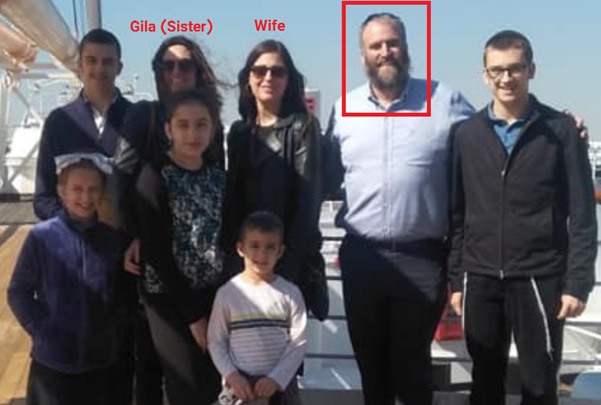
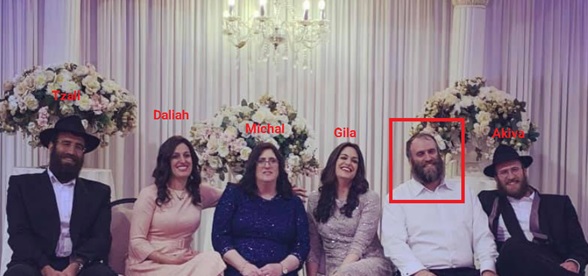
The Camissar family itself functions as a transnational network:
Brother: Rabbi Akiva Camissar, religious emissary to Israelis in Amsterdam
Siblings:
Gila – Atlanta
Michal – Israel
Daliah – Ukraine
Tzali – Miami
Ephraim – Israel
Marital ties further connect the family to senior rabbis and yeshiva administrators. This geographic dispersion creates a soft-power infrastructure spanning religion, migration, media, and tourism—one that operates across borders with remarkable ease.
Contact Channels and Digital Presence
Camissar maintains unusually open and multi-layered channels of communication, reflecting his role as a central connector between tourists, religious institutions, kosher businesses, and international projects.
Direct Contact:
Email: ephraimccc@gmail.com
Israel phones: +972-54-769-0318 | +972-54-523-5770
Dubai / kosher tourism: +972-58-551-1911
Social Media:
Instagram: https://www.instagram.com/kamisar_world
X (Twitter): https://x.com/Ecamisaar
Facebook: https://www.facebook.com/profile.php?id=100067682914856
YouTube: https://www.youtube.com/@kamisartv3037
These platforms function not merely as communication tools, but as a controlled narrative ecosystem—presenting Dubai as a safe Jewish space, normalizing Israeli presence, promoting a religious-luxury lifestyle, and reinforcing the persona of Camissar as a trusted intermediary.
Conclusion
Ephraim Camissar cannot be accurately described as just a radio host or religious figure. He represents a new category of soft-power operator: an individual who begins in the yeshiva, gains legitimacy through religious media, leverages geopolitical agreements, and ultimately embeds ideological presence through food, travel, symbolism, and storytelling.
Of course, that’s not all we know…!